Selecting the correct compact track excavator balance centers on tail-swing configuration and site access dimensions. A 1.5-ton to 2-ton ultra-compact model fits through standard 36-inch pedestrian gates in dense…
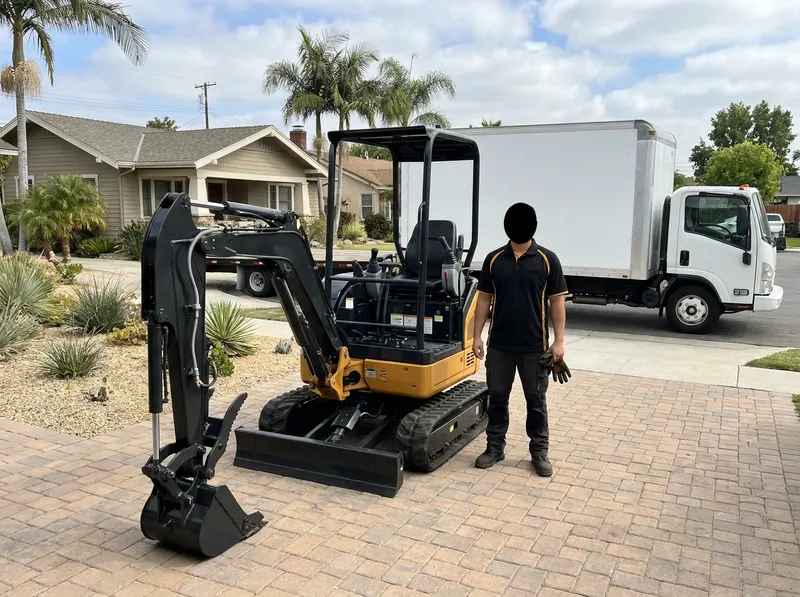
Selecting the correct compact track excavator balance centers on tail-swing configuration and site access dimensions. A 1.5-ton to 2-ton ultra-compact model fits through standard 36-inch pedestrian gates in dense residential parcels across West Anaheim and Ponderosa Park, making it practical for backyard plumbing replacements where full-size machinery cannot maneuver without fence removal. When foundation footing excavations or asphalt removals near commercial structures in The Canyon (Anaheim Canyon) require deeper penetration, step up to a 3.5-ton to 5-ton excavator offering an 8-to-11-foot maximum dig depth. Zero tail-swing machines eliminate the risk of counterweight damage against perimeter walls or adjacent structures along narrow alleys in the Anaheim Colony Historic District, though they present a wider track profile than conventional models.
Operating efficiency hinges on soil composition and ground surface protection. Excavation across clay-heavy soils in Anaheim Hills demands smooth hydraulic controls and steel-reinforced rubber tracks to prevent slope slippage while cutting drainage swales. On paved or decorative concrete driveways common in Southeast Anaheim and the Platinum Triangle, operating rubber-tracked units reduces surface marring compared to steel tracks, but surface displacement remains a risk during pivot turns. Laying 3/4-inch plywood ground protection along the travel path prevents concrete edge spalling and asphalt rutting. The trade-off between machine mass and cycle speed is precise: a 2-ton machine moves 0.05 cubic yards per scoop and preserves turf integrity, while a 5-ton excavator shifts up to 0.25 cubic yards per bucket cycle but requires a wider turning radius and thicker timber mats to prevent subgrade compaction.
Site readiness dictates project velocity and prevents idle crew downtime. Under California law, subterranean line verification via Underground Service Alert (811 ticket) must occur at least two business days prior to mechanical excavation near commercial corridors around the Anaheim Resort District. Dispatch coordination accounts for transport trailer clearances; residential streets require sufficient staging length for a truck and 20-foot equipment trailer to drop the ramps safely. Once unloaded, inspect bucket tooth wear, auxiliary hydraulic coupling seals for attachments like hydraulic breakers or augers, and fluid levels before tracking onto the work pad. Step 1: Confirm site access width, overhead electrical clearance, and 811 utility markings. Step 2: Call (657) 505-1653 to match the exact tonnage and bucket width to your digging specs. Step 3: Receive delivery, run the visual pre-operation inspection, and sign the delivery verification ticket.
Every job gets a firm, written price after a free on-site visit.
Tell us about your mini excavator rentals job in Anaheim and we'll send a clear, written quote, usually the same day.
 Dependable Dumpster Rental